The EU AI Act is already in force
Regulation 2024/1689 applies in phases since 2024. Prohibited practices and AI literacy duties already apply, and further obligations follow on a fixed calendar.

ISO 42001 · Antwerp
In Antwerp, we build your AI management system to ISO/IEC 42001:2023, from AI inventory to certification audit. You get AI governance that auditors, customers and the EU AI Act can all rely on.
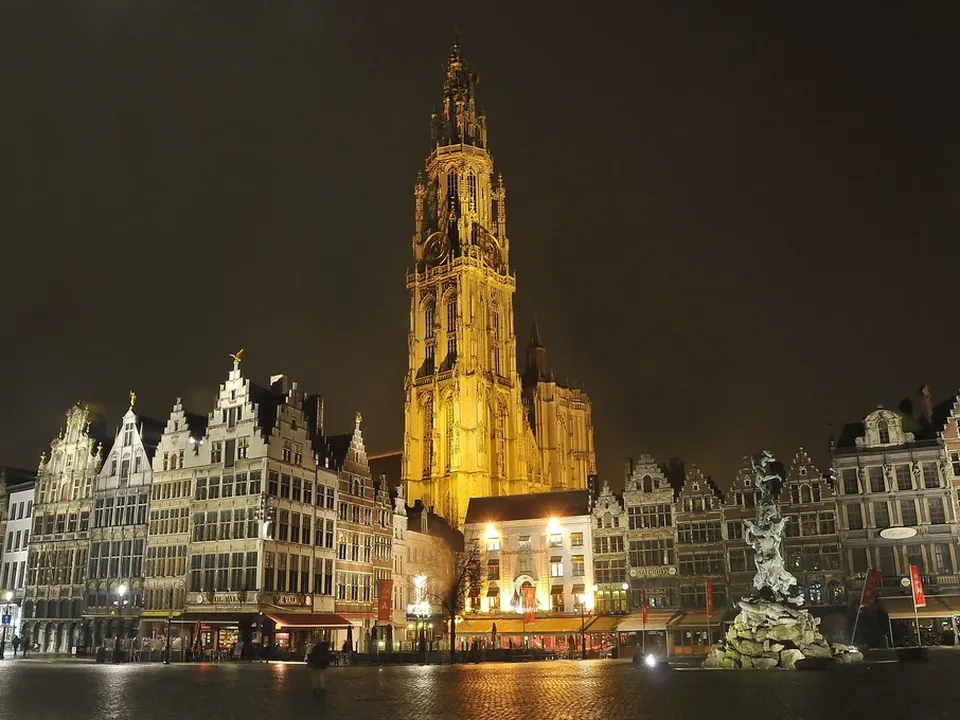
Local context
In Antwerp, AI rarely lives in a chatbot. It sits in operations: berth and yard planning, demand forecasting, camera-based damage checks or predictive maintenance on process equipment. When such a model fails quietly, cargo stalls or a unit drifts outside its operating window. ISO 42001 makes you name each system, its owner and the person who can override it.
Chemical producers in the port cluster face a specific issue. An AI model that influences a safety-related function may also fall under product safety rules, not only the AI Act. We check that link during the inventory and keep process safety engineers in the impact assessment. Trading houses more often use AI for price setting, counterparty screening or fraud detection.
Large customers in these chains audit their suppliers closely, and AI questions now join the security questionnaire. We can run workshops in Dutch, English or French, at your premises or in the port area. Antwerp is about 45 minutes from our Brussels office by train, so regular on-site days are easy to plan.
Antwerp is home to the Port of Antwerp-Bruges, one of Europe's largest ports, and to Europe's largest integrated chemical cluster. Logistics operators, chemical plants, diamond and trading houses depend on connected operational systems that suppliers and customers audit closely.
Antwerp is about 45 minutes from our Brussels office by train. We work on site at your premises or in the port area, or remotely.
What is at stake
Regulation 2024/1689 applies in phases since 2024. Prohibited practices and AI literacy duties already apply, and further obligations follow on a fixed calendar.
Procurement teams now send AI questionnaires next to security ones. Without a documented system, each answer is improvised and deals slow down.
Bias, opacity, model drift and misuse are not covered by a classic security risk register. They need their own assessment and owners.
Key sectors in Antwerp
Route planning and demand forecasting models drive daily operations, and ISO 42001 makes their monitoring and fallback explicit.
AI used in process control or safety analysis needs documented validation and clear limits before anyone relies on it.
Pricing and forecasting algorithms affect margins and customers, so their risks and owners must be documented and reviewed.
Predictive maintenance and quality inspection models need data quality rules and human review to stay trustworthy.
What we do
We do not start everything at once. The scoping call shows which workstream matters most, and we start there.
We list every AI system you build, buy or embed, including third-party APIs. We confirm your role for each: provider, deployer or user.
We extend your risk method to AI-specific harms. We run the AI system impact assessment required by the standard for each in-scope system.
We write the AI policy, roles and lifecycle procedures from design to retirement. Controls cover data quality, transparency, human oversight and suppliers.
We run the internal audit and the management review, then prepare your teams for the certification body. If you hold ISO 27001, we extend that system rather than duplicate it.
A 30-minute call is enough to scope your AI management system and its next steps.
Regulators
Centre for Cybersecurity Belgium: national NIS 2 authority, registration and incident notification.
Belgian Data Protection Authority: GDPR supervision and complaints.
Financial supervisors for banks, insurers and investment firms, including DORA.
Belgian law of 26 April 2024, in force since 18 October 2024, with CyberFundamentals as the reference framework.
The method
Each step ends with a document you keep, even if the engagement stops.
A free 30-minute call to understand your AI use, your customers' demands and your timeline.
Deliverable : Written scope and fixed price per lotWe interview product, data and IT teams and list every AI system in scope.
Deliverable : AI system register with roles and ownersWe compare current practice with clauses 4 to 10 and Annex A of ISO/IEC 42001.
Deliverable : Gap analysis report with prioritised actionsWe assess each system for risks to the organisation, to individuals and to society.
Deliverable : AI risk register and impact assessmentsWe draft policies, procedures and the Statement of Applicability, then help teams apply them.
Deliverable : AI management system documentation setWe audit the system, run the management review and support you during the external audit.
Deliverable : Internal audit report and certification readiness fileScope and budget
Questions
Yes, as a deployer. ISO 42001 covers AI you buy or embed, not only what you build. We set supplier requirements and check what each vendor documents about training data, updates and limits.
It can, if you include those systems in the scope. We work with your OT and process safety teams to define oversight, testing and fallback modes. The standard does not replace sector safety rules but sits alongside them.
Not on its own. The standard gives you the governance, risk and documentation the Act expects. We map your AI Act obligations separately so nothing is left to assumption.
A large part. Both standards share the same management system structure. Document control, internal audit and management review can be extended rather than rebuilt.
Yes. We work on-site or remotely, in French, Dutch or English. Workshops with product and data teams often work best in person.
Last step
Tell us how you use AI today. You receive a written scope and a fixed price per lot after our call.