Work that depends on email and spreadsheets
Requests travel by email, versions multiply on shared drives and nobody sees where a file is stuck. Delays and errors grow with every new hire.

Digitalisation · Brussels
We help organisations in Brussels move quotes, orders, HR, invoicing and support off paper, email and shared drives. Each lot changes one process, with one tool, one internal owner and a measurable result.
Local context
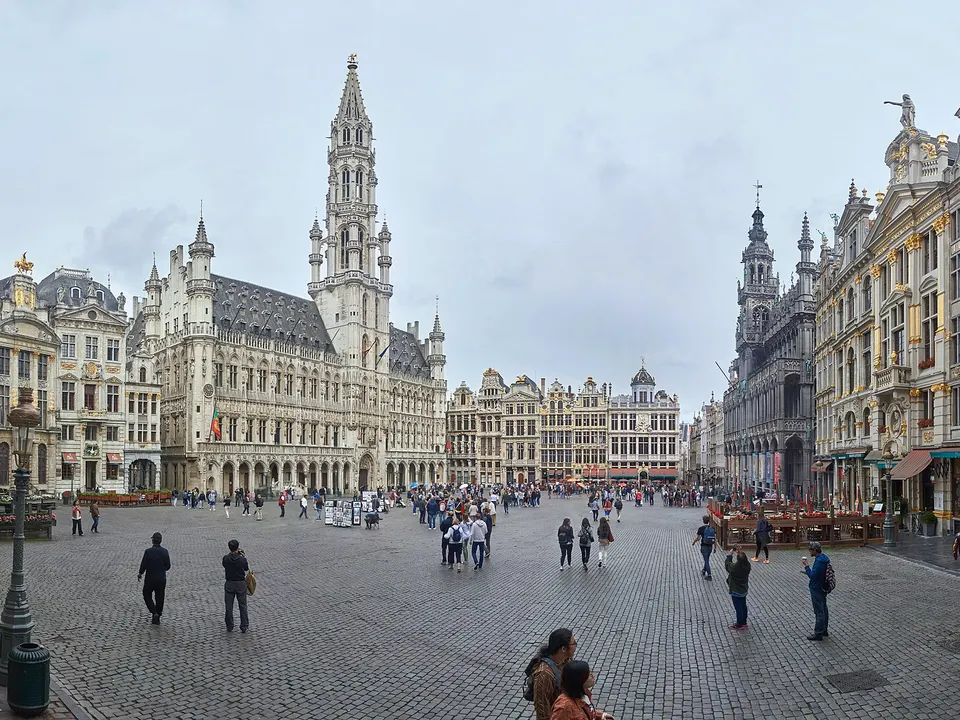
Public bodies, associations and headquarters in Brussels still run many processes on email, PDFs and signed paper. Forms, approvals and requests usually need to exist in French and Dutch, and sometimes in English. We map one flow at a time and design a digital version that works in every required language.
Since 1 January 2026, Belgian companies must exchange structured electronic invoices with each other through Peppol. For many finance teams, that obligation is a good moment to rethink purchase approvals and invoice processing as a whole. We map the full flow, from order to payment, and connect the tools you already use.
Professional services and financial firms also need e-signature, document management and access rights that hold up during a client audit. We build retention, backups and access reviews into each lot, in line with GDPR and with NIS 2 where it applies. Our office is in central Brussels, so mapping workshops take place at your premises.
Brussels concentrates EU institutions, federal administrations, company headquarters, banks, insurers and law and consulting firms. Many organisations work in French, Dutch and English at the same time, and answer to both Belgian and European supervisors.
Our office is at Place Sainte-Gudule 14, in the city centre. We work on site in the 19 communes and the periphery, or remotely.
What is at stake
Requests travel by email, versions multiply on shared drives and nobody sees where a file is stuck. Delays and errors grow with every new hire.
Licences pile up while teams keep their old habits. Costs rise, data is entered twice and systems contradict each other.
Every new platform adds accounts, data flows and suppliers. GDPR, and NIS 2 where it applies, require access, backups and supplier risk to be handled from the start.
Key sectors in Brussels
Public bodies digitise requests, approvals and records to cut processing times while keeping decisions traceable and personal data protected.
Financial firms replace manual onboarding and approval chains with controlled workflows that leave the audit trail supervisors expect.
Professional services firms free billable time when engagement letters, time entry and invoicing run through one controlled workflow.
Fast-growing tech companies need finance, HR and support processes that scale with headcount instead of relying on a few people.
What we do
We do not start everything at once. The scoping call shows which workstream matters most, and we start there.
We map the current flow with the people who run it: steps, files, errors and waiting times. Then we define the target flow and what to automate.
CRM, ERP, e-signature, document management, Microsoft 365 or an intranet. Keep, replace or connect, based on total cost and fit.
Short training, clear user rights, a cutover window and a named internal owner. Teams adopt the new way of working or the project fails.
Access rights, backups, retention and supplier contracts are part of each lot. They are not left for a later variation.
A 30-minute call is enough to pick the right first process and define what success means.
Regulators
Centre for Cybersecurity Belgium: national NIS 2 authority, registration and incident notification.
Belgian Data Protection Authority: GDPR supervision and complaints.
Financial supervisors for banks, insurers and investment firms, including DORA.
Belgian law of 26 April 2024, in force since 18 October 2024, with CyberFundamentals as the reference framework.
The method
Each step ends with a document you keep, even if the engagement stops.
A free 30-minute call to pick the process that hurts most and agree what done looks like. We then send a written scope and a fixed price per lot.
Deliverable : Written scope and fixed-price proposalWe document who does what, with which files and systems, and where errors and delays occur. We measure cycle time on real cases.
Deliverable : As-is process map with baseline measuresWe define the steps to keep, cut and automate, and the data each step needs. Roles and approvals are agreed with the process owner.
Deliverable : To-be process designWe compare options, including your existing licences, on fit, total cost, integration and security. You choose with a written comparison in hand.
Deliverable : Written tool recommendationWe configure the tool, migrate the needed data and set access rights. Go-live happens in an agreed window with a fallback plan.
Deliverable : Configuration record and cutover planWe train users by role and check the new flow after a few weeks. We compare cycle time, errors and manual chases with the baseline.
Deliverable : Before-and-after reportScope and budget
Questions
Yes. Forms, notifications and templates are designed in French and Dutch from the start, and in English if needed. We test each language version with real users before go-live.
Peppol covers the exchange of invoices, not the approval and booking around it. Purchase orders, approvals and archiving often remain manual. We measure that wider flow and target the steps that still cost the most time.
With one process that costs time every week and has a clear owner, such as quotes, purchase approvals or invoicing. A first lot that works builds support for the next ones.
Yes. Mapping workshops work best on site in Brussels, with the people who actually run the process. Later stages can run remotely, in French, Dutch or English.
Not necessarily. Many organisations already pay for tools they barely use, such as Microsoft 365. We check what you own before recommending anything new.
Last step
Tell us which process you want to change. We reply with a scoping call slot, then a written scope and fixed price per lot.